Waste lithium-ion batteries and industrial battery packs are classified as hazardous waste due to residual charge, flammable electrolytes, and reactive metals. During shredding, friction and short circuits may generate sparks, heat, or even fire.
Key Battery Recycling Systems
A professional battery recycling plant must focus on stable material feeding, controlled shredding, inert gas protection, etc.
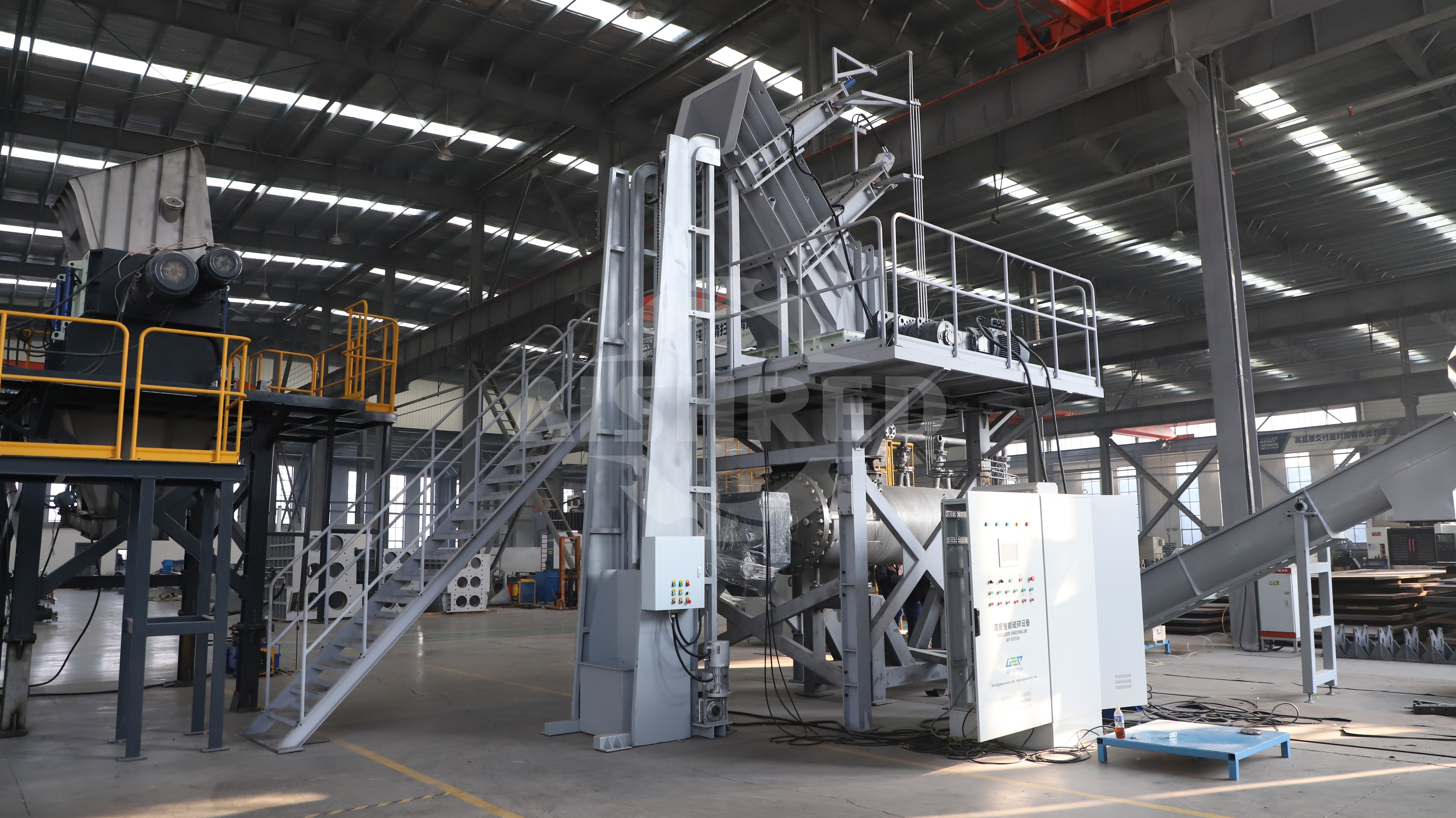
Bucket Elevator Lifting System
Before shredding, materials are transported through a bucket elevator lifting system to ensure stable and safe feeding.
Advantages include:
- Enclosed conveying structure
- Stable and continuous material feeding
- Reduced material leakage
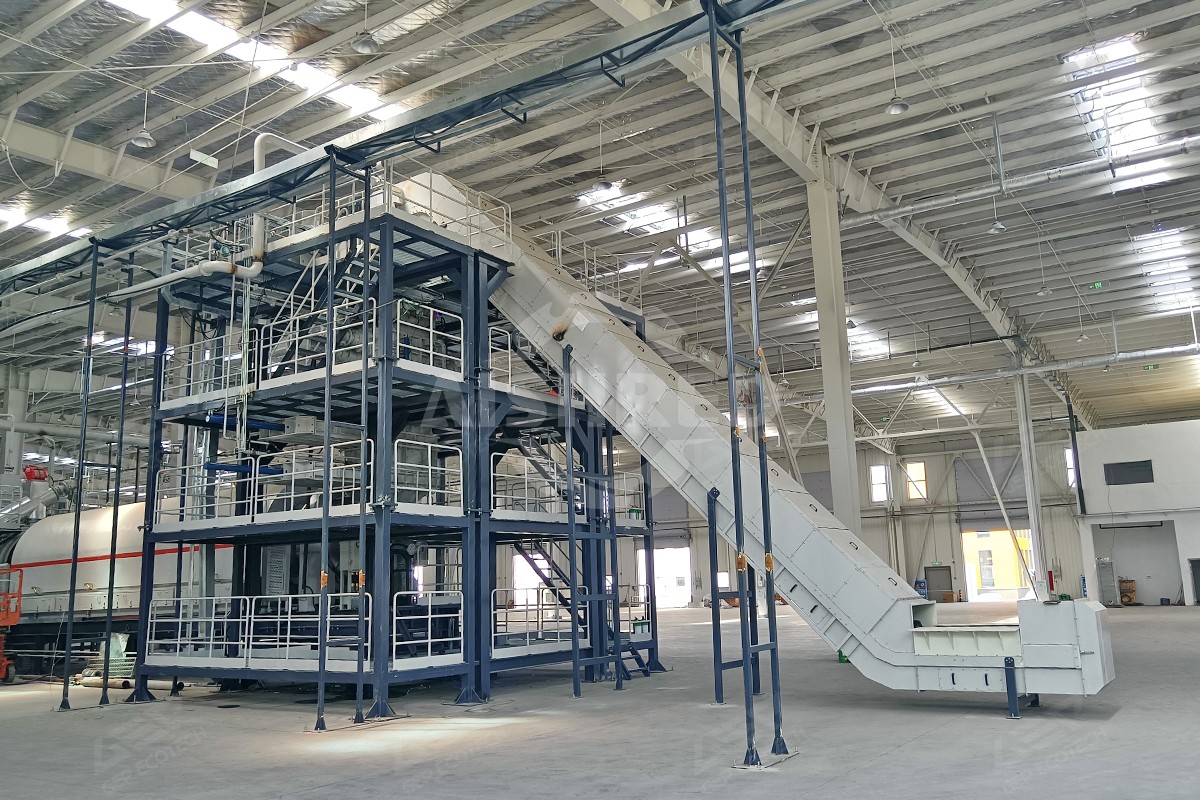
Four Shaft Shredding System
The core equipment for hazardous battery processing is the four shaft shredder, designed for low-speed, high-torque operation to minimize heat generation and spark risk.
- Main features include:
- Low-speed, high-torque cutting structure
- Wear-resistant alloy blades
- Fully enclosed shredding chamber
- Auto-reverse design for overload protection
- Controlled discharge size with adjustable screens
This system is suitable for lithium-ion batteries, small EV battery modules (after dismantling), lead-acid batteries, and mixed battery waste.
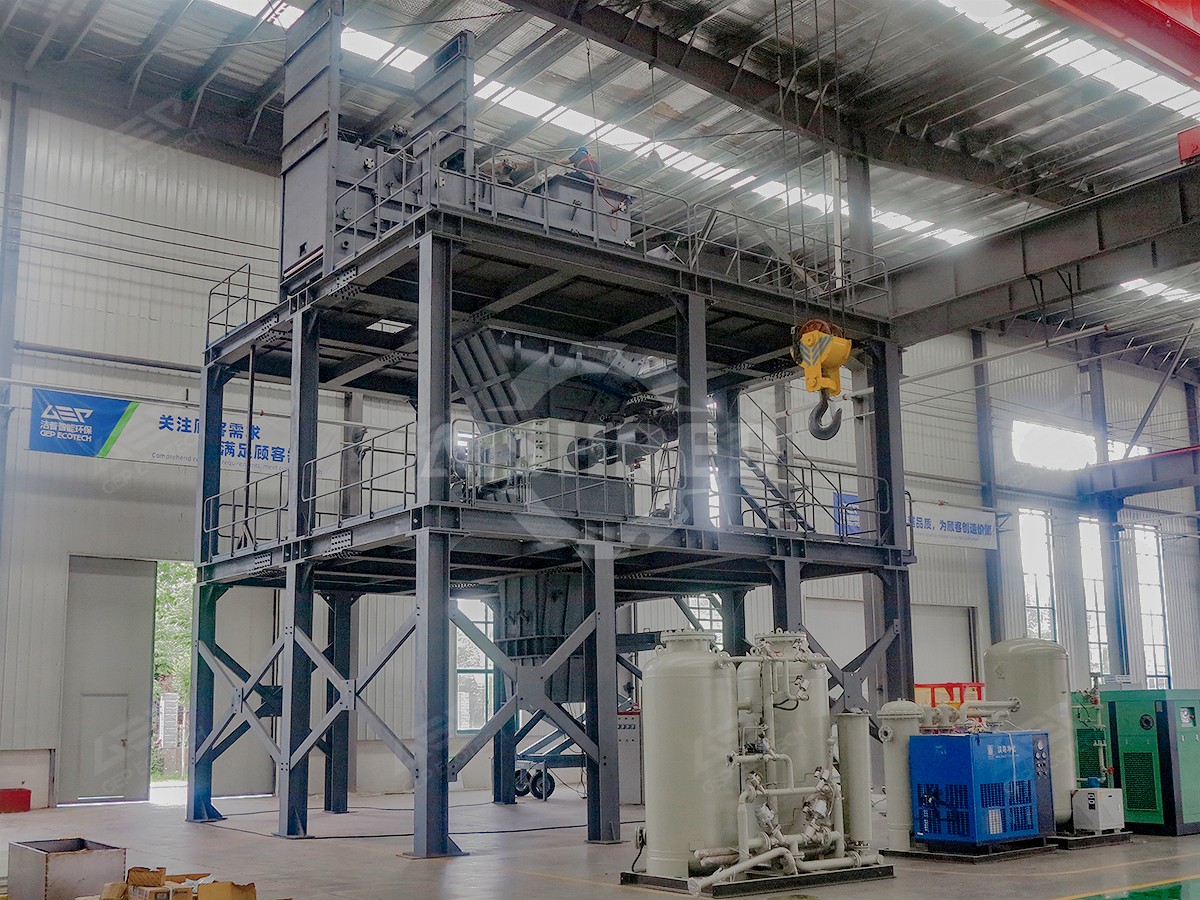
Inert Gas Fire Fighting System
To further reduce fire and explosion risks, the shredding chamber can be equipped with an inert gas fire fighting system.
Key functions:
- Nitrogen injection to reduce oxygen concentration
- Continuous oxygen level monitoring
- Automatic linkage with PLC control system
When oxygen levels exceed the preset threshold, the system automatically adjusts gas supply or stops feeding. This significantly reduces combustion risk during shredding operations.
Modular and Integrated Design by GEP ECOTECH
Besides the above mentioned systems, GEP ECOTECH can provides the whole integrated hazardous waste battery shredding and recycling solutions designed for high safety standards, stable operation, and reliable downstream processing. A complete hazardous battery pre-treatment line may also include:
- Feeding system
- CO2 passive fire fighting system (optional)
- Discharge system
- Maintenance and repair system
- Intelligent PLC control system
If you have relative inquiries for hazardous waste recycling, please feel free to contact us.