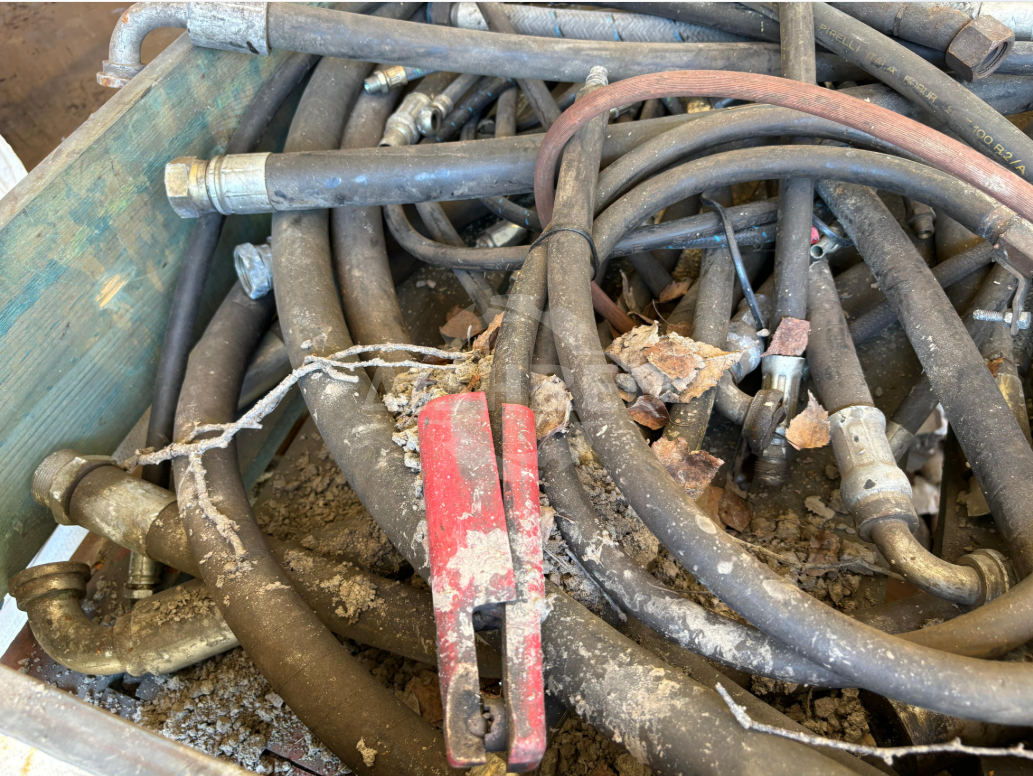
Hydraulic hoses are widely used in construction machinery, mining equipment, industrial machinery, agricultural vehicles, and hydraulic systems. After long-term use, these hoses become worn, damaged, or unsuitable for further operation, generating considerable amounts of industrial rubber waste.
Unlike ordinary rubber waste, hydraulic hoses feature a multi-layer structure consisting of inner rubber, reinforced steel wire layers, and an outer rubber cover. The steel reinforcement provides excellent pressure resistance and durability, but also makes recycling more challenging.
How can these waste hydraulic hoses be efficiently processed while recovering valuable rubber and steel resources? GEP ECOTECH provides reliable shredding and size-reduction solutions to help customers improve hydraulic hose recycling efficiency.
1. Why Is Hydraulic Hose Recycling Challenging?
The recycling of hydraulic hoses requires special consideration of their material composition and structural characteristics.
- Multi-layer Construction: Hydraulic hoses typically consist of inner and outer rubber layers combined with one or more layers of steel wire reinforcement.
- Strong Steel Reinforcement: Braided or spiraled steel wires are tightly embedded in the rubber, making separation difficult through conventional shredding alone.
- Various Sizes and Specifications: Different hose diameters, lengths, wall thicknesses, and reinforcement structures require appropriate equipment configurations.
- Efficient Material Separation: To recover valuable resources, the processing system needs to reduce material size and release the embedded steel wires for subsequent separation.
Therefore, an effective hydraulic hose recycling solution should combine powerful shredding with appropriate mechanical separation and magnetic sorting processes.
2. Hydraulic Hose Recycling Process
GEP ECOTECH offers customized solid waste shredding and recycling equipment for processing waste hydraulic hoses.
By selecting suitable shredders and downstream separation equipment, customers can establish an efficient recycling process according to their raw materials, processing capacity, and final product requirements.
A typical processing line can include the following stages:
Step 1: Raw Material Preparation
Waste hydraulic hoses are collected and inspected before processing. Any residual hydraulic oil should be safely drained and collected, and contaminated materials should be properly handled. Long hoses may be cut into suitable lengths according to the feeding requirements.
Step 2: Primary Shredding
GEP ECOTECH Double Shaft Shredder integrated with trommel screen can be used for the initial size reduction of waste hydraulic hoses.
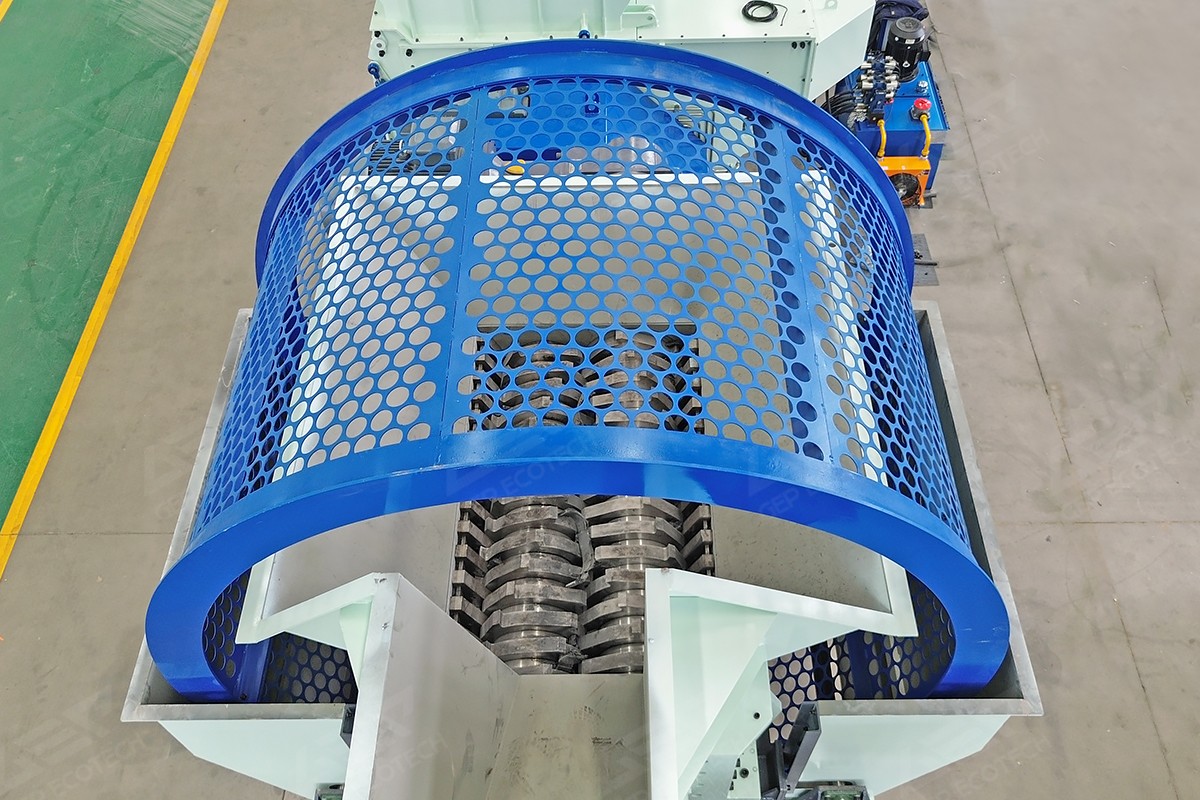
Featuring a low-speed, high-torque shredding mechanism, the machine cuts bulky hoses into smaller pieces, making subsequent processing and material separation easier.
Its robust construction and heavy-duty cutting system are suitable for demanding industrial waste applications.
Step 3: Secondary Shredding and Steel Wire Liberation
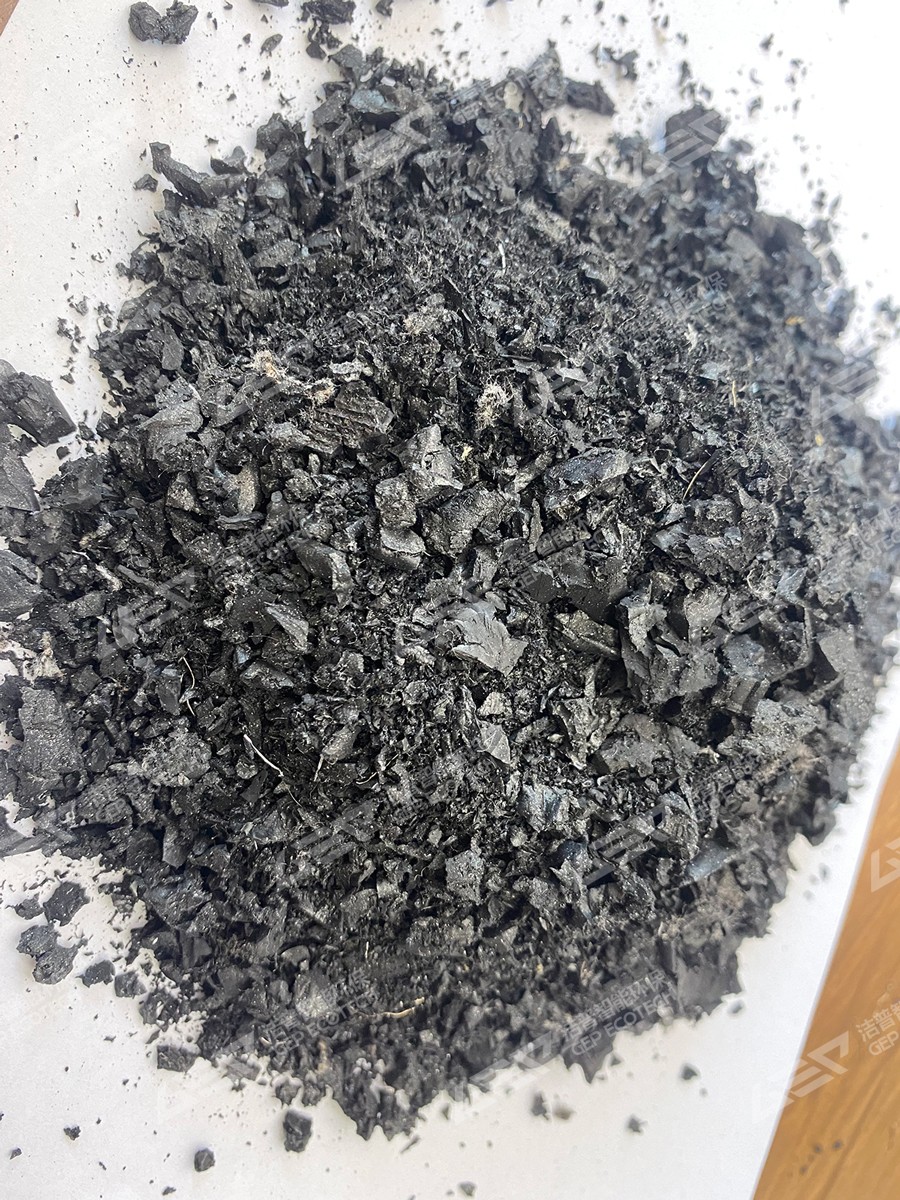
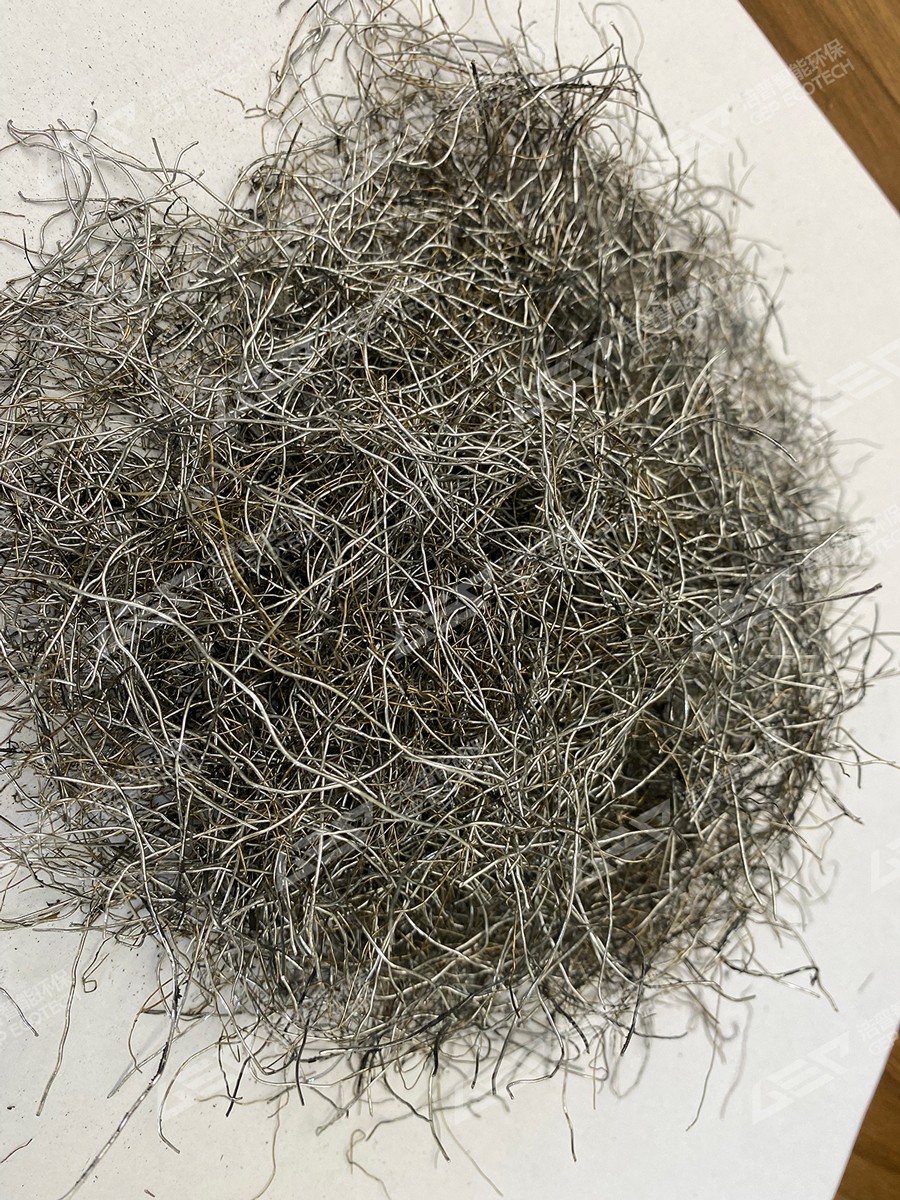
Depending on the hose structure and required separation results, additional processing equipment can be introduced to further reduce the material size and mechanically release steel wires embedded in the rubber.
The equipment configuration can be adjusted according to the diameter, reinforcement structure, and processing requirements of the hydraulic hoses.
Step 4: Magnetic Separation
After the steel wires are sufficiently exposed and released, magnetic separation equipment can recover ferrous metal from the shredded material.
This stage helps reduce the metal content in the rubber fraction and improves the quality of the recovered materials.
Step 5: Screening and Final Material Recovery
Screening equipment can be incorporated to classify the processed rubber materials according to the required particle size. Oversized or insufficiently separated materials can be returned for further processing when necessary.
The final products include recovered steel wire and rubber fragments, which can be directed toward suitable downstream recycling applications.
3. Why Choose GEP ECOTECH for Hydraulic Hose Recycling?
GEP ECOTECH specializes in intelligent solid waste recycling solutions and industrial shredding equipment. We focus on matching equipment configurations to the actual characteristics of different waste materials.
Powerful Shredding Performance
Our industrial shredders feature low-speed, high-torque cutting technology to handle demanding materials and achieve effective size reduction.
Heavy-Duty Machine Construction
Robust cutter assemblies, durable materials, and reliable transmission systems support stable operation in industrial recycling applications.
Customized Recycling Solutions
From individual shredders to complete processing lines, equipment configurations can be customized according to raw material characteristics, required capacity, output size, and separation targets.
Integrated Processing Options
Shredding, secondary size reduction, magnetic separation, and screening equipment can be combined to create a more efficient hydraulic hose recycling system.
Professional Technical Support
Our team can assist with equipment selection, process configuration, and material testing to help customers identify a suitable recycling solution.
4. Turn Waste Hydraulic Hoses into Valuable Resources
Waste hydraulic hoses should not simply be treated as industrial waste. With appropriate recycling technology, their rubber and steel components can be recovered and directed toward further resource utilization.
GEP ECOTECH is committed to providing efficient and reliable shredding solutions for industrial rubber waste recycling.
Whether you are processing hydraulic hoses, steel wire-reinforced rubber hoses, or other industrial rubber waste, our team can help you develop a suitable equipment configuration.
Looking for a reliable hydraulic hose recycling solution?
Contact GEP ECOTECH today to discuss your project requirements. Send us your raw material photos or samples, and let our technical team help you evaluate the right shredding and separation solution.
GEP ECOTECH—Turn Waste into Valuable Resources!