As the demand for renewable energy continues to grow, biomass pellets have become an efficient and sustainable alternative to fossil fuels. Produced from agricultural residues, forestry waste, and other organic materials, biomass pellets are widely used for industrial boilers, power generation, and residential heating. A biomass pellet machine plays a key role in converting loose biomass into dense, uniform pellets that are easier to transport, store, and burn.
Whether you are planning to build a new biomass pellet plant or upgrade an existing production line, selecting the right equipment is essential for achieving stable production, consistent pellet quality, and long-term profitability.
What Is a Biomass Pellet Machine?
A biomass pellet machine is industrial equipment designed to compress prepared biomass materials into cylindrical fuel pellets under high pressure. During the pelletizing process, natural lignin contained in wood and plant fibers softens due to frictional heat, helping bind the particles together without the need for additional chemical adhesives in many applications.
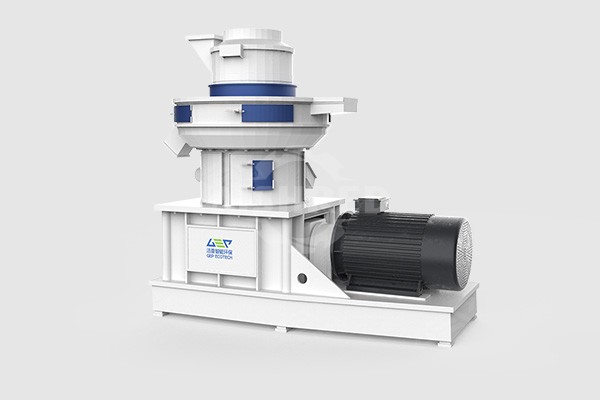
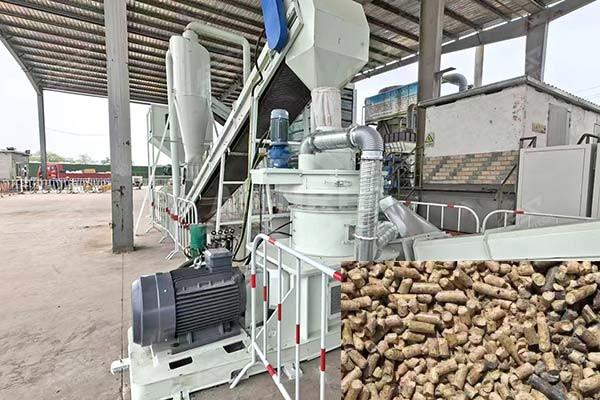
Industrial biomass pellet machines are commonly integrated into complete pellet production lines, which typically include shredding, drying, pelletizing, cooling, screening, and packaging systems.
Suitable Raw Materials
A modern biomass pellet machine can process a wide variety of biomass materials, including:
- Sawdust
- Wood chips
- Wood shavings
- Waste palm leaves
- Wheat straw
- Corn stalks
- Peanut shells
- Bagasse
- Bamboo residues
- Forestry waste
To achieve high-quality pellets, raw materials should generally be reduced to a suitable particle size and adjusted to an appropriate moisture content before pelletizing. Proper material preparation helps improve pellet density, durability, and production efficiency.
How Does a Biomass Pellet Machine Work?
The pellet production process generally consists of the following steps:
- Size Reduction—Large biomass materials are crushed into smaller particles using a hammer mill or crusher.
- Drying—Moisture is reduced to the recommended level for pellet production.
- Pelletizing—Prepared materials are compressed through a ring die or flat die to form pellets.
- Cooling—Newly formed pellets are cooled to improve strength and stability.
- Screening and Packaging—Fine particles are removed before the finished pellets are packaged or stored.
A well-designed production line ensures stable output, lower energy consumption, and consistent pellet quality.
Advantages of Industrial Biomass Pellet Machines
Investing in a high-quality biomass pellet machine offers several advantages:
- High production efficiency
- Uniform pellet size and density
- Reduced transportation and storage costs
- Improved fuel combustion efficiency
- Automatic or semi-automatic operation
- Low maintenance requirements
- Compatibility with various biomass materials
- Flexible capacity options for different production scales
Modern industrial pellet machines also feature intelligent control systems that help operators monitor production and optimize performance.
How to Choose the Right Biomass Pellet Machine
Selecting the right pellet machine depends on several important factors:
- Raw Material Type
Different biomass materials have different fiber structures, moisture levels, and bulk densities. Equipment should be matched to the characteristics of your feedstock.
- Production Capacity
Choose equipment based on your expected output, whether it is several hundred kilograms per hour or multiple tons per hour.
- Pellet Size
Industrial fuel pellets are commonly produced in different diameters depending on local market requirements and application standards.
- Automation Level
Automatic production lines can reduce labor costs while improving production consistency and operational efficiency.
- After-Sales Service
Reliable technical support, spare parts availability, and installation assistance are essential for maintaining long-term productivity.
Applications of Biomass Pellets
Biomass pellets are widely used in:
- Industrial steam boilers
- Biomass power plants
- District heating systems
- Commercial heating facilities
- Residential heating
- Renewable energy projects
As governments and industries continue to promote cleaner energy solutions, biomass pellets are becoming an increasingly important component of the global renewable energy market.
Every biomass project is unique. The ideal pellet production solution depends on your raw material, target capacity, pellet specifications, and local energy requirements.
If you are planning a biomass pellet production project, contact GEP ECOTECH today. Our engineers will evaluate your application and recommend a customized biomass pellet solution that supports efficient production and long-term operational performance.