In the past few years, biomass pellets have gradually entered the mainstream vision of industrial heating and power generation procurement from a relatively marginal alternative fuel option. The driving forces behind this are not complicated: the price fluctuation of fossil fuels has increased, carbon constraints have tightened, and the raw materials for pellets—sawdust, straw, nutshells, forestry residues—in most regions, on the contrary, increasingly need to be properly disposed of. Transforming "the cost of waste disposal" into "the income of fuel production" is the most basic logic of this industry, and it is also the reason why it can be established in different markets.
From the perspective of market size, this trend has clear data support. The global biomass pellet market size in 2025 is in the range of 10 to 14 billion USD, and the forecast compound annual growth rate of multiple research institutions is concentrated at around 6%. Europe remains the largest single market, accounting for about 38.5% of the global share in 2025; Japan, South Korea, and some Southeast Asian markets are incorporating pellets into co-firing or boiler retrofit schemes for coal-fired power plants to reduce carbon emission intensity and meet renewable energy quota requirements.
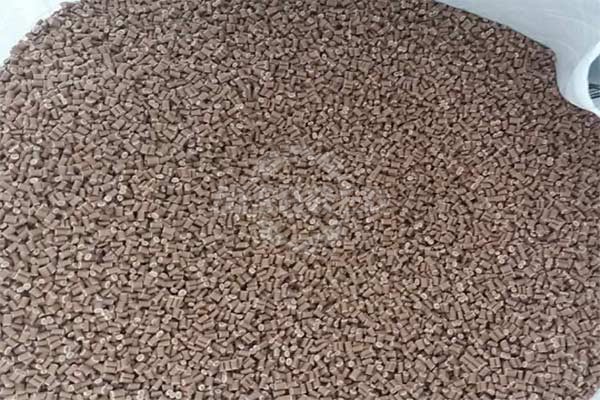
Advantages of Using Biomass Pellets
For enterprises currently evaluating pellet projects, the benefits in the following aspects are relatively direct.
Comparability of Calorific Value and Cost
The calorific value of pellets varies due to different raw materials and processes, but the lower heating value of wood pellets and high-quality agricultural pellets can usually reach the level of 4,000–4,500 kcal/kg, which is sufficient to cover the fuel needs of most industrial boilers and civil heating furnaces. In terms of market price, the price of biomass pellets is at a similar or slightly higher position compared with coal, but considering the extremely low sulfur content and controllable ash content of pellet combustion, the burden and operating cost of back-end flue gas treatment will decrease accordingly.
Accountability of Carbon Emission Reduction
The carbon footprint of biomass pellets within their life cycle is significantly lower than that of fossil fuels. Some studies based on localized data calculations show that 1 ton of mixed biomass pellets can replace about 0.6 tons of standard coal, achieving a carbon emission reduction benefit of 1,440–1,800 kg CO2 equivalent. Under the EU RED III framework, the sustainability and greenhouse gas saving standards for biomass fuels have been further tightened since May 2025, and the carbon attributes of compliant pellets are becoming a tradable, auditable asset, rather than just an "environmental label".
Adaptability at the Raw Material End
The pelletizing technology itself does not depend on a single raw material. Wood processing residues, corn straw, rice husks, peanut shells, bagasse, bamboo shavings, and even furniture and flooring waste and garden trimmings can all enter the ring die pelletizing process after appropriate pre-treatment. This means that the raw material strategy of a pellet project can be designed according to the composition of local waste streams, without having to compete with food crops for resources, and without having to extend the logistics radius too long.
Introduction of Biomass Pellet Production Line and Equipment Selection Suggestions
Whether the above benefits can be realized depends on the equipment stage. The density, strength, forming rate, and unit power consumption of pellets ultimately depend on the adaptability of the pellet mill to specific raw materials. The biomass pellet mill of GEP ECOTECH has a capacity range from 0.7–1.4 t/h to 3.5–4 t/h, and the pellet specifications can be adjusted according to the requirements of back-end applications, which can correspond to the capacity needs of industrial heating, power plant co-firing, and regional central heating of different scales.
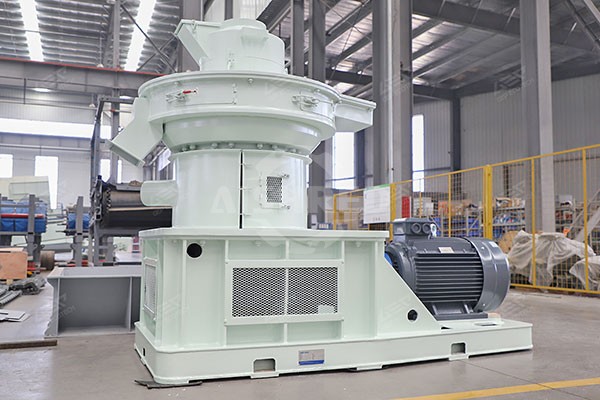
The core working logic of this equipment is pure physical extrusion without adding binders. The lignin in biomass softens and exhibits viscosity in the range of 70–110°C. Under the relative rotational extrusion of the ring die and the pressure roller, components such as cellulose and hemicellulose are tightly pressed into the die holes, and naturally gain strength after cooling. This process is divided into three functional zones: feeding, deformation and compression, and extrusion forming. The material completes the transition from loose powder to dense pellets during the gradual narrowing of the die-roller gap. It is important to understand this: the selection of a pellet mill is not simply looking at "the larger the power, the better", but to see whether the ring die aperture, compression ratio, and die-roller gap match the fiber structure and moisture content of the target raw material. Wood raw materials and straw raw materials have different requirements for compression ratio, and raw materials with high fine powder content and raw materials with long fibers also perform differently in the feeding and forming zones.
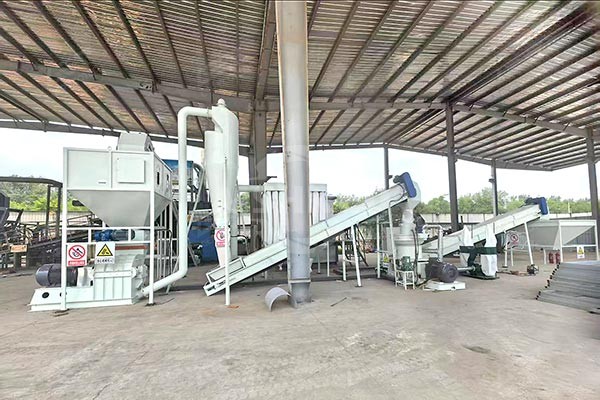
In addition to single machines, GEP ECOTECH can provide customized production line solutions for customers. A complete pellet production line usually includes pre-shredding, fine shredding, iron removal, conditioning, pelletizing, cooling, screening, and packaging stages. The configuration of each stage depends on the initial form of the raw material and the quality requirements of the target pellets. For example, to process 300 kg alfalfa bales and loose flax stalks, it is necessary to first use a low-speed and high-torque double shaft shredder for bale breaking and pre-shredding, then refine to a feed particle size of 10–50 mm through a hammer mill, and finally enter the pellet mill for forming. When processing furniture factory waste or sawdust, the front-end process can be simplified, and the focus is placed on the iron removal and conditioning stages to ensure the cleanliness and forming stability of the pellets. If the production line design is separated from the actual state of the raw materials, it will be difficult to stably reach the designed capacity no matter how good the performance of the single machine is.
Market Evaluation Suggestions
From a more pragmatic perspective, the current biomass pellet market is increasingly focusing on whether the pellets meet the specific specifications of the downstream. This means that pellet production is no longer a simple business where it can be sold as soon as it is produced. Below are several issues that need to be paid attention to before entering this market:
What is the form, moisture content, and fiber characteristics of locally stable raw materials?
Is the target market civil heating, industrial boilers, or power plant co-firing, and what are the corresponding pellet specifications and certification requirements?
What is the expected daily operating hours and annual capacity scale?
The approach adopted by GEP ECOTECH in customized production line solutions is exactly to take raw material characteristic analysis and capacity targets as the starting point, and then match the equipment specifications of each stage of shredding, crushing, iron removal, pelletizing, and cooling. If you are looking for a biomass pellet production line solution, you are welcome to contact us for consultation.
Case Reference: https://www.gepecotech.com/project/luxi-chemical-biomass-pellet-technical-renovation-project.html