Agricultural film, a crucial tool for increasing yield and preserving moisture in modern farming, brings economic benefits while also creating a growing "white pollution" crisis due to its non-biodegradable nature. Broken residual film entangled in soil hinders water and fertilizer penetration, affects crop root growth, and damages soil structure, directly threatening food security and ecological health. Therefore, promoting the scientific recycling and resource utilization of waste agricultural film has become a key task for rural revitalization and ecological civilization.
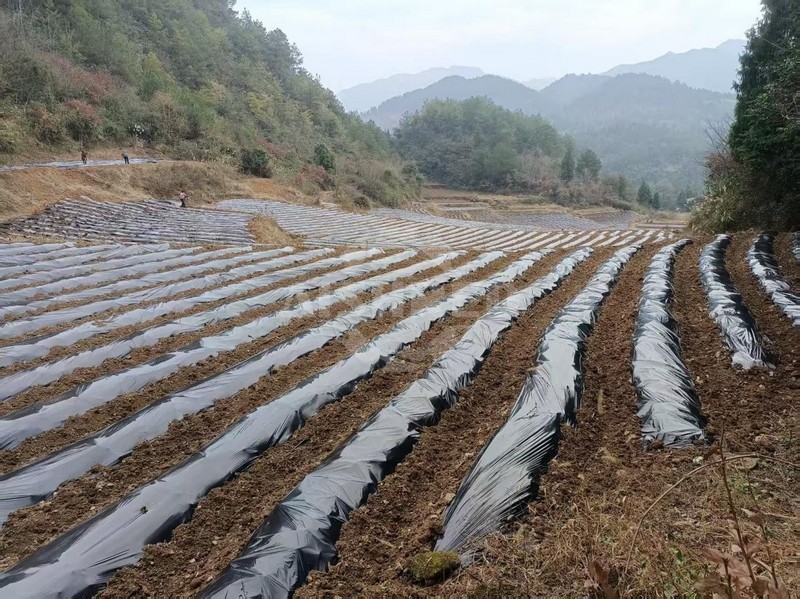
Recycling Waste Agricultural Film: Unlocking Triple Value—Economic, Social, and Ecological
Recycling waste agricultural film is a meaningful endeavor:
- Significant Economic Value: The main component of waste agricultural film is polyethylene (PE), a tradable renewable resource. Through efficient sorting and purification, it can be transformed into high-value recycled raw materials or high-calorific-value fuel, generating direct economic benefits and turning "waste into treasure".
- Notable Social Value: It actively responds to national policies on preventing agricultural non-point source pollution and strengthening plastic pollution control, representing concrete action to fulfill social responsibility and promote circular economy development.
- Major Ecological Value: It effectively removes plastic residues from soil, controls "white pollution", improves farmland quality, ensures sustainable land use, and achieves genuine "clean soil returning to fields.
GEP ECOTECH Professional Solution: Precision Sorting for High-Value Recycling
Addressing the challenges of waste agricultural film—high impurity content (significant soil, entangled straw) and difficult sorting—GEP ECOTECH leverages over a decade of deep experience in solid waste treatment to offer an efficient integrated solution: the "Double-Shaft Shredder + Three-Stage Trommel Screen". This solution is specifically designed for waste agricultural film recycling, particularly suitable for recycling scenarios pursuing high impurity removal rates and high-purity material separation.
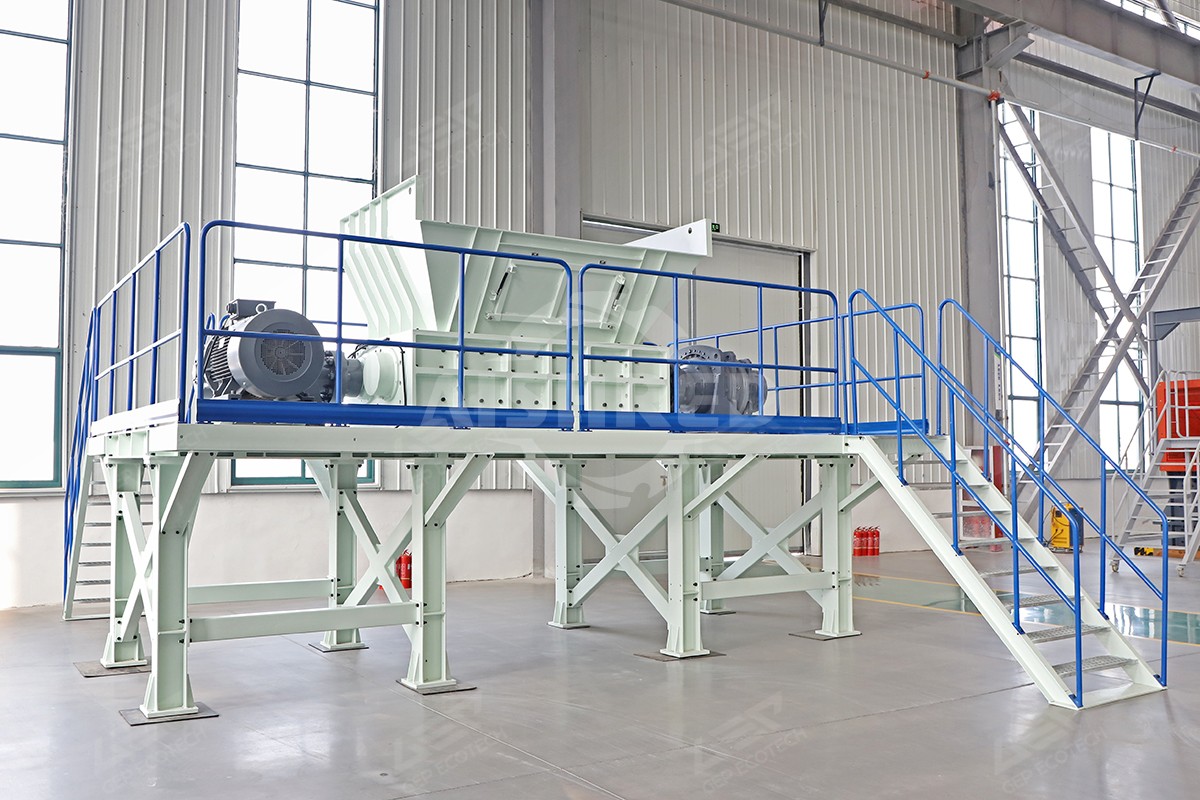
Core Process Analysis (For 15-25 tons/hour capacity)
- Primary Shredding and Loosening: Mixed material (waste agricultural film, straw, soil, etc.) first enters the GD10 Dual-Shaft Waste Film Shredder (2X90kW). Its unique shearing action powerfully shreds large, tangled bundles of film and effectively breaks up clumped soil, creating ideal conditions for subsequent efficient sorting.
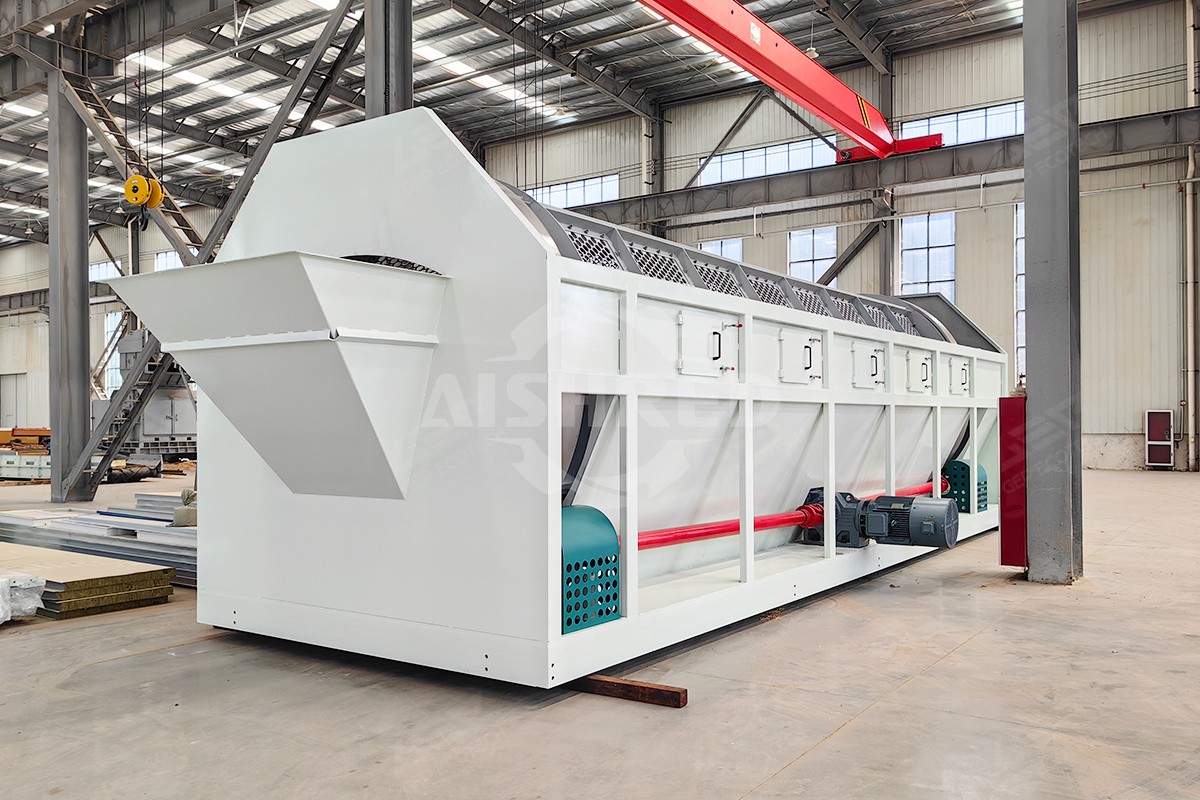
- Primary Screening (Removing Large Debris): The shredded material enters the first Trommel Screen (100mm aperture). This primarily separates larger impurities like long straw and stones, yielding a more uniform mixture.
- Secondary Screening (Separating Medium/Large Materials): The mixture enters the second Trommel Screen (35mm aperture). This stage effectively screens out mostly medium-sized clean film fragments and some straw, while soil and small impurities are preliminarily separated.
- Tertiary Screening (Fine Screening and Purification): The material finally enters the third Trommel Screen (5mm aperture). This is the key step for achieving high-purity separation. The final outputs are:
Oversize Material: Primarily clean, relatively large film fragments with high purity, which can be baled and sold directly as premium recycled raw material.
Undersize Material: Primarily inert impurities like soil and small stones, which can be directly returned to fields.
Midsize Material (Optional based on design): May include some small film pieces, short straw, etc., which can be further processed or used as fuel based on requirements.
Solution Advantages Summary
- High Efficiency and Purity: Three-stage trommel screens provide targeted, step-by-step sorting with extremely high impurity removal rates, producing high-purity film fragments that significantly enhance the value of recycled material.
- Smooth Process Flow: Tightly integrated equipment with high automation reduces manual intervention and ensures stable operation.
- Flexible Adaptation: Screen apertures can be customized based on actual feedstock and final product requirements, offering strong adaptability.
- Fast Return on Investment: Compared to complex washing-pelletizing lines, this solution focuses on efficient sorting with more reasonable equipment investment. It quickly transforms recycled material into market-ready recycled raw material or fuel, enabling rapid profitability.
GEP ECOTECH not only provides advanced equipment but is also committed to offering comprehensive solutions covering process design, equipment configuration, installation and commissioning guidance, and operational support. Choosing GEP ECOTECH means choosing a technologically reliable and economically viable path for the resource recovery of waste agricultural film.