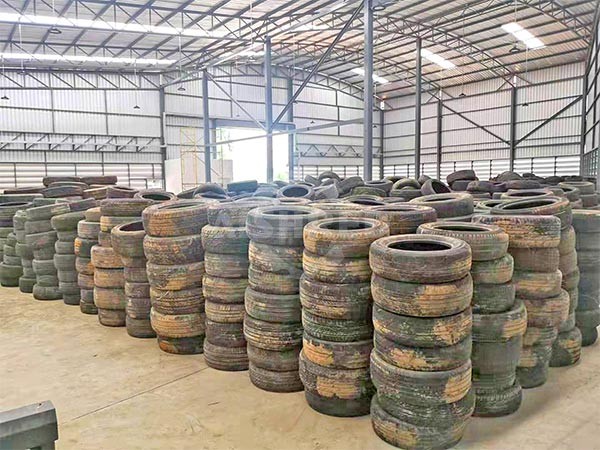
Waste tires are known as "black pollution", with huge global annual generation. Processing waste tires into rubber powder is an important pathway for resource utilization. In 2025, the global waste tire rubber powder market size exceeded USD 5.86 billion, and it is expected to exceed USD 9.24 billion by 2030. Against this backdrop, investing in tire grinding production lines has become a track of interest for many entrepreneurs. However, rubber powder is not "one product"—different particle sizes of rubber powder correspond to completely different equipment inputs, application scenarios, and economic benefits. This article will systematically analyze tire grinding production lines of different particle sizes from three dimensions: inputs, returns, and recommendations.
Equipment Types and Investment Scales
Tire grinding equipment can be divided into three levels according to processing capacity and process complexity:
Small Tire Grinding Line (Capacity ≤5 TPD)
It mainly includes single-machine equipment, such as rubber grinders. This type of equipment has a low investment threshold and is suitable for start-ups to test on a small scale, producing coarse rubber powder of around 20–40 mesh.
Medium Rubber Powder Production Line (Capacity 5–30 TPD)
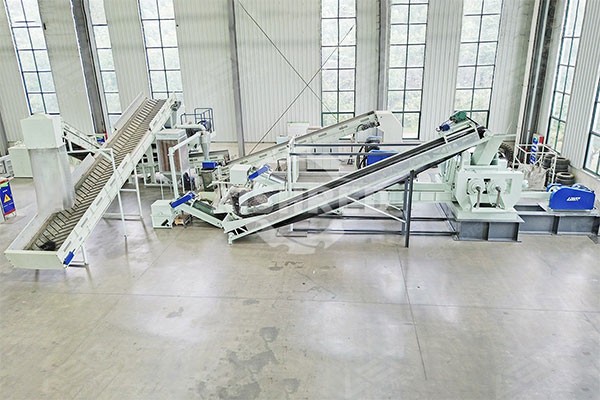
It includes the full process of shredding, magnetic separation, rubber grinding, screening, and fiber removal. This is the current mainstream configuration in the market and can produce fine rubber powder of 40–80 mesh.
Large Continuous Production Lines (Capacity ≥30 TPD)
If further equipped with pyrolysis units, the initial investment is substantial, but full-component resource utilization can be achieved.
Process Differences Corresponding to Different Particle Sizes
The core difference in producing rubber product of different particle sizes lies in the grinding process:
- Coarse rubber powder below 40 mesh: It can use ambient-temperature grinding, with relatively simple equipment and lower energy consumption.
- Fine rubber powder of 40–80 mesh: It requires more precise grinding equipment and classification systems, with significantly increased equipment investment.
- Ultra-fine rubber powder above 80 mesh: The ambient-temperature grinding is generally limited to about 80 mesh at most due to equipment heating. To produce ultra-fine rubber powder above 200 mesh, cryogenic grinding technology is required, with equipment investment multiplying.
Recycling Pathways and Economic Benefits of Rubber Powder of Different Particle Sizes
Coarse Rubber Powder (20–40 Mesh)—Infrastructure and Paving Materials
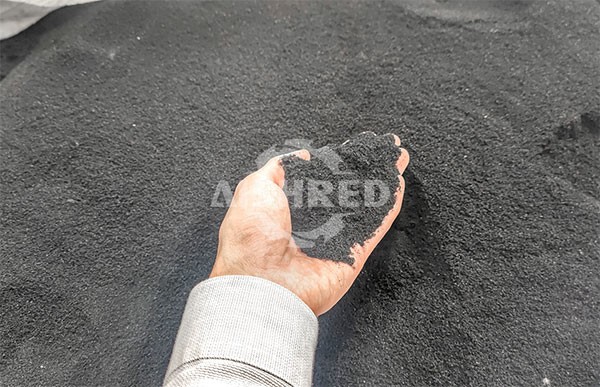
coarse rubber powder is mainly used in sports tracks, road cushion layers, lawns, sports ground paving, and similar fields. Although these products have relatively low added value and limited gross profit margin per ton of rubber powder, the market demand is large.
Fine Rubber Powder (40–80 Mesh)—Modified Asphalt and Rubber Products.
Among these, modified asphalt is the largest application scenario—In 2025, the rubber-modified asphalt market size reached RMB 14.3 billion, a year-on-year increase of 9.1%. High-grade highways have continuously increasing requirements for noise reduction, crack resistance, and durability, and the cost-performance advantage of rubber-modified asphalt is becoming increasingly prominent.
Ultra-Fine Rubber Powder (Above 80 Mesh)—Representing the High-End Direction of the Industry
Its application fields include:
Plastic modification: used for modifying materials such as polypropylene and low-density polyethylene to improve impact resistance and stiffness.
High-performance rubber products: military products, sealing strips, brake pads, etc.
Emerging fields: 3D printing rubber consumables, lithium battery capacitors, rubber aerogels, etc.
The market penetration rate of ultra-fine rubber powder (above 80 mesh) is currently only 18%, but the growth potential is huge. If combined with high-value-added deep processing (such as preparing thermoplastic elastomer TPE or using it in 3D printing materials), the profit margin can be further increased to over 40%.
However, it should be noted that the investment in ultra-fine rubber powder production lines is much higher than that of ordinary lines. Cryogenic grinding equipment requires large investment and high energy consumption, and it is necessary to assess whether the market size is sufficient to support production capacity.
Investment Recommendations
- The investment span in the tire grinding industry is extremely wide. It is recommended that investors choose an appropriate starting point based on their own capital strength and risk tolerance.
- The procurement cost of waste tires is a key variable affecting profits. It is recommended to investigate in advance whether the local waste tire recycling channels are stable, whether recycling prices have seasonal fluctuations, and whether transportation costs are reasonable.
- Environmental compliance has become an industry access threshold. When procuring equipment, it is necessary to confirm: whether a complete dust removal system is equipped, and whether it meets local environmental impact assessment requirements.
- The demand structure for rubber powder varies greatly across different regions. It is recommended to conduct in-depth research on potential downstream customers before investment and sign agreements before installing equipment, to avoid the passive situation of "building a factory first and then finding customers."
Choosing the right particle size, controlling costs well, maintaining environmental compliance, and targeting the right market—If these four dimensions are properly addressed, a tire grinding production line can certainly become a consistently profitable good business. GEP ECOTECH has been deeply engaged in the waste tire disposal field for many years, accumulating rich industry experience and mature technical solutions, and can provide customers with comprehensive support. GEP ECOTECH will provide you with professional equipment selection references and customized solutions based on your actual needs. You are welcome to contact us at any time to jointly explore the commercial value of tire resource utilization.