
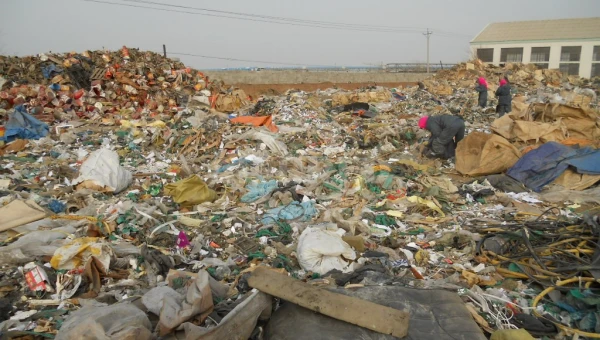
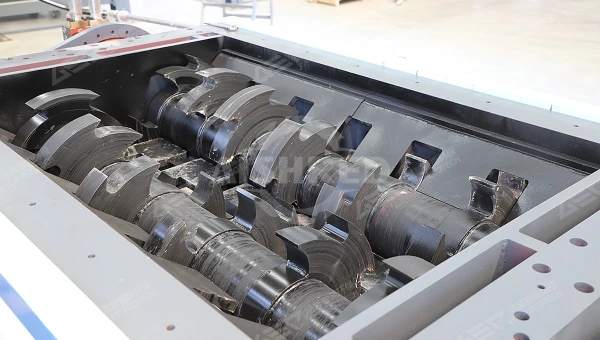
Municipal solid waste (MSW) pyrolysis technology is a treatment method that converts organic components in MSW into pyrolysis gas, pyrolysis oil, and solid residue (semi-coke) through heating decomposition under oxygen‑free or oxygen‑limited conditions. Compared with traditional incineration, pyrolysis has significant advantages such as small flue gas volume, low dioxin generation, and recyclable products, and has become one of the important technical routes for harmless treatment, volume reduction, and resource utilization of MSW in recent years.The pretreatment of a typical MSW pyrolysis production line usually includes processes such as shredding, sorting, magnetic separation, and drying. In the shredding process, the raw MSW first needs to undergo coarse shredding treatment—shredding bulky materials mixed with furniture, sofas, mattresses, appliance shells, tires, plastics, wood, kitchen waste, and other complex components to a suitable size, so as to create favorable conditions for subsequent sorting,