Wind turbines are built to last 20–25 years. Their blades are built to be light, strong, and aerodynamic. Those same properties make them a nightmare to recycle.
The retirement wave is here. GWEC expects annual blade waste to rise from about 10,000 tonnes in 2025 to around 110,000 tonnes by 2030. Cumulative global blade waste could hit 8.6 million tonnes by 2042, with China alone responsible for about 40%. That is not a future problem. It is a logistics and processing problem arriving now.
The Composite Problem
A blde is not steel. It is a sandwich of glass fiber, thermoset resin, balsa or PVC foam, and sometimes carbon fiber. The resin holds everything together. You cannot melt it off. You cannot easily separate the fibers. Landfilling has been the easy answer, but Europe has restricted composite disposal, and other regions are following. Meanwhile, blades have grown past 100 meters. Moving one is a project. Cutting one up is another.
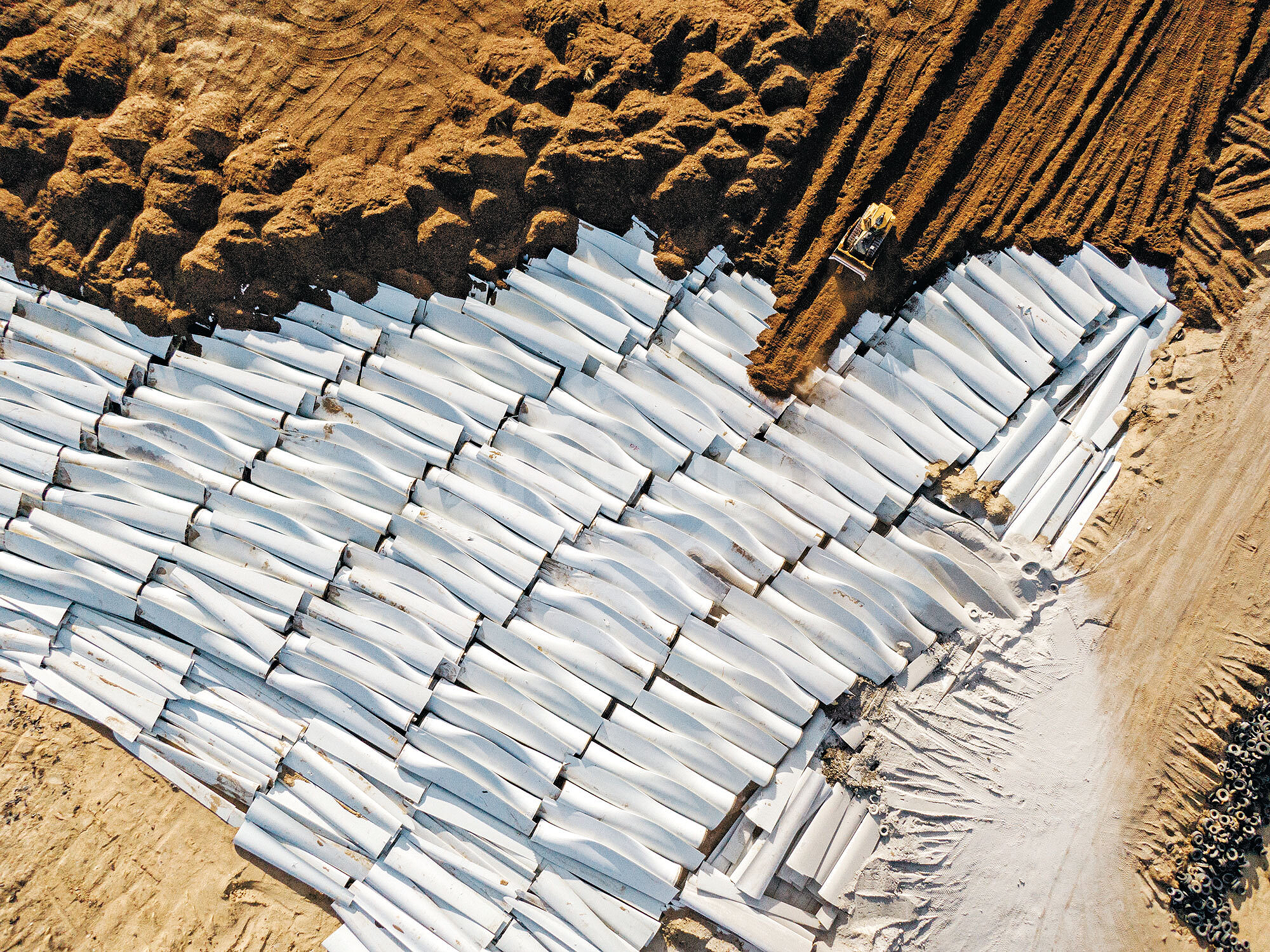
Blade sections after on-site cutting. Size reduction starts at the wind farm, not at the recycling plant.
What Optimization Actually Means
There is no single machine that "recycles" a blade. A working recycling chain needs several steps, and each step has to match the material. That is where GEP ECOTECH focuses. We do not claim to have invented a chemical process that separates resin from fiber. We build the pretreatment system that makes downstream recycling possible.
The basic flow is straightforward: on-site dismantling and cutting, primary shredding, fine shredding, magnetic separation, air classification, dust collection, and then downstream utilization. Simple on paper. Difficult in practice, because glass fiber reinforced plastic is abrasive, dusty, and tough on cutters.
GEP ECOTECH's blade processing line is built around low-speed, high-torque shredding. The GD series dual-shaft shredder takes large blade sections and reduces them to 200–300 mm fragments. A fine shredder then brings the material down to 20–50 mm, depending on the final use. Magnetic separators pull out bolts and metal connectors. Air classification helps separate light fractions. Pulse dust collectors and negative pressure systems keep glass fiber dust under control. Enclosed conveyors keep the line automated and the workplace safer.
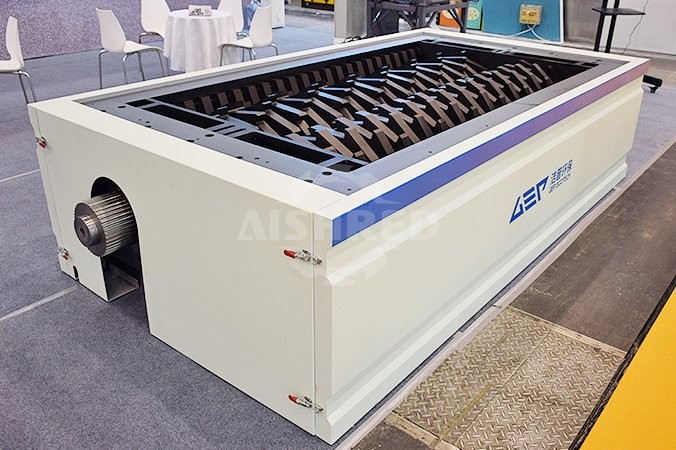
Caption: Low-speed, high-torque cutting is essential for abrasive glass fiber composites. Standard high-speed shredders wear out too fast.
The line can be configured as a stationary plant or a mobile unit. That matters. Some projects have a single wind farm to decommission. Others need a regional hub that serves multiple sites. The equipment should fit the project, not the other way around.
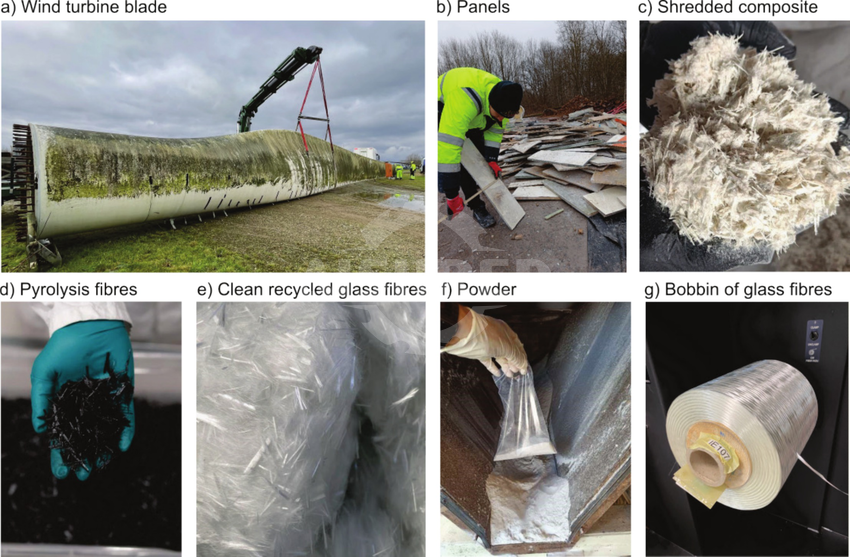
Caption: From dismantling to resource recovery. Pretreatment is the bridge between decommissioning and final recycling.
Where the Material Goes
Cement co-processing is the most scalable route today. Shredded blade material goes into a cement kiln. The resin burns as alternative fuel. The glass fiber becomes part of the raw material mix. No secondary residue. A peer-reviewed study put the profit at about $27.57 per tonne. It is not a gold mine, but it works at industrial scale.
Pyrolysis is the next step. It uses heat in the absence of oxygen to break down the resin and recover glass fibers, oils, and gases. A techno-economic study of a 7,000-tonne-per-year blade pyrolysis plant has already been published. The concept is moving from lab to feasibility.
Chemical dissolution is the high-value future. It can achieve the highest circularity and the biggest carbon reduction. But for now, it remains mostly in the laboratory. The honest view: cement co-processing pays the bills today. Pyrolysis will carry more volume tomorrow. Chemical recycling is the long-term prize. GEP ECOTECH’s pretreatment system is designed to feed any of them.
The Industry Is Moving
Siemens Gamesa's RecyclableBlade has been installed at RWE’s Sofia offshore wind farm in the UK, with 108-meter blades on 14 MW turbines. Vestas and Aarhus University's CETEC project developed a chemical disassembly process for epoxy blades, now being scaled with Stena Recycling in Sweden. A decommissioning project in Spain processed 100% of blade material at a dedicated facility and reached a 99.8% recyclability rate for the wind farm.
These are real steps. But the gap between demonstration and industrial infrastructure is still wide. The blade recycling market was valued at $73.7 million in 2025 and is projected to reach $158.9 million by 2030, a 16.6% CAGR. Healthy growth. Still small compared with the blades coming down.
Our View
The wind industry will solve the chemistry eventually. Until then, the shredding has to work. The material handling has to be safe. The dust has to be controlled. The line has to run without constant jamming. That is the unglamorous part of blade recycling, and it is the part we know best.
If you are planning a blade decommissioning project, evaluating a recycling line, or looking for a pretreatment partner who understands fiber-reinforced composites, talk to us. We have spent years working with FRP waste—boats, tanks, pipes, and blades. We know where the problems show up.