With the rapid development of coconut shell activated carbon production, biomass carbonization, and carbon material industries, more companies are looking for suitable coconut shell preprocessing equipment.
Coconut shells feature high hardness, strong toughness, and high density, making direct feeding into carbonization furnaces inefficient. Proper size reduction before carbonization helps improve heating uniformity, carbonization efficiency, and final product quality.
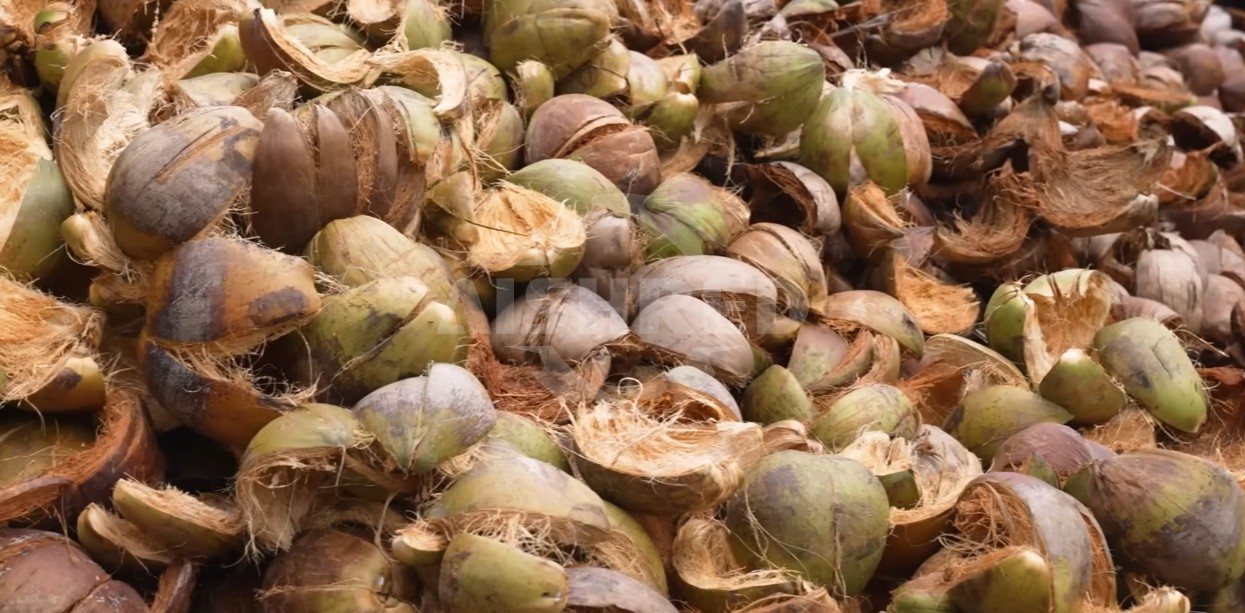
The two most commonly used crushing solutions are:
- Twin Shaft Shredder
- Hammer Mill Crusher
Although both machines can process coconut shells, they differ significantly in crushing principle, application range, and processing performance.
Twin Shaft Shredder: Ideal for Coconut Shell Coarse Crushing
A twin shaft shredder uses low-speed, high-torque shearing technology. Two rotating shafts equipped with cutters tear, squeeze, and shear coconut shells into smaller pieces.
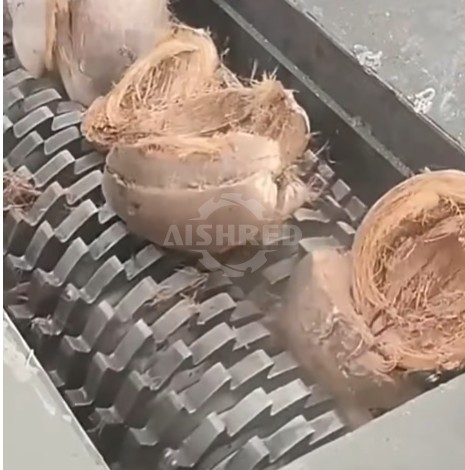
It is especially suitable for:
- Whole coconut shells;
- Half shells;
- Large-size coconut shell materials.
Key advantages:
- Strong adaptability: Handles whole shells and contaminated materials effectively;
- High torque design: Easily processes hard coconut shells with low blockage risk;
- Low-speed operation: Less noise and dust generation;
- Automatic reverse protection: Protects the machine from overload;
- Replaceable cutters: Reduces maintenance costs;
- Stable continuous operation: Suitable for industrial carbonization lines.
For activated carbon manufacturers, the twin shaft shredder is usually the first-stage preprocessing machine.
Hammer Mill Crusher: Suitable for Fine Crushing
A hammer mill crusher uses high-speed impact force generated by rotating hammers to crush coconut shells into smaller particles.
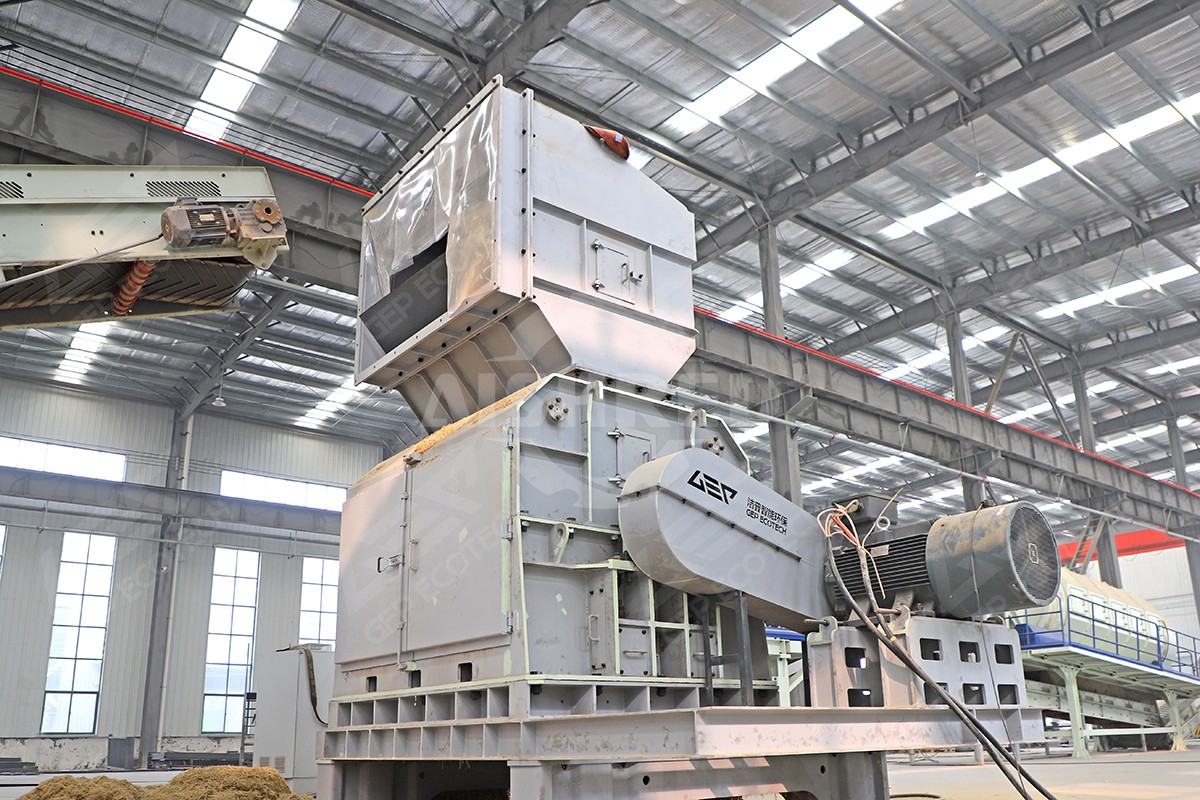
It is mainly used for:
- Pre-crushed coconut shells;
- Smaller shell pieces;
- Applications requiring finer output size.
Advantages:
- High crushing efficiency;
- Finer particle size;
- Adjustable output through different screen sizes;
- Suitable for further processing.
By changing screens such as 10mm, 20mm, or 30mm openings, the output size can be adjusted according to carbonization requirements.
However, compared with twin shaft shredders:
- It is not suitable for large whole coconut shells directly;
- Hammer wear is higher due to high-speed impact;
- It requires cleaner materials;
- Pre-crushing is usually recommended.
Therefore, hammer mills are commonly used as secondary crushing equipment.
Comparison: Twin Shaft Shredder vs Hammer Mill
| Item | Twin Shaft Shredder | Hammer Mill Crusher |
|---|---|---|
| Crushing principle | Shearing & tearing | High-speed impact |
| Suitable materials | Whole shells, large shells | Small or pre-crushed shells |
| Capacity | 0.2-50 t/h | 3.5-20 t/h |
| Output size | 20-100mm | <50mm |
| Particle control | Moderate | Better with screens |
| Energy consumption | Lower | Higher |
| Wear resistance | High | Medium |
| Blockage risk | Low | Higher |
| Dust & noise | Lower | Higher, dust control required |
Recommended Coconut Shell Carbonization Solutions
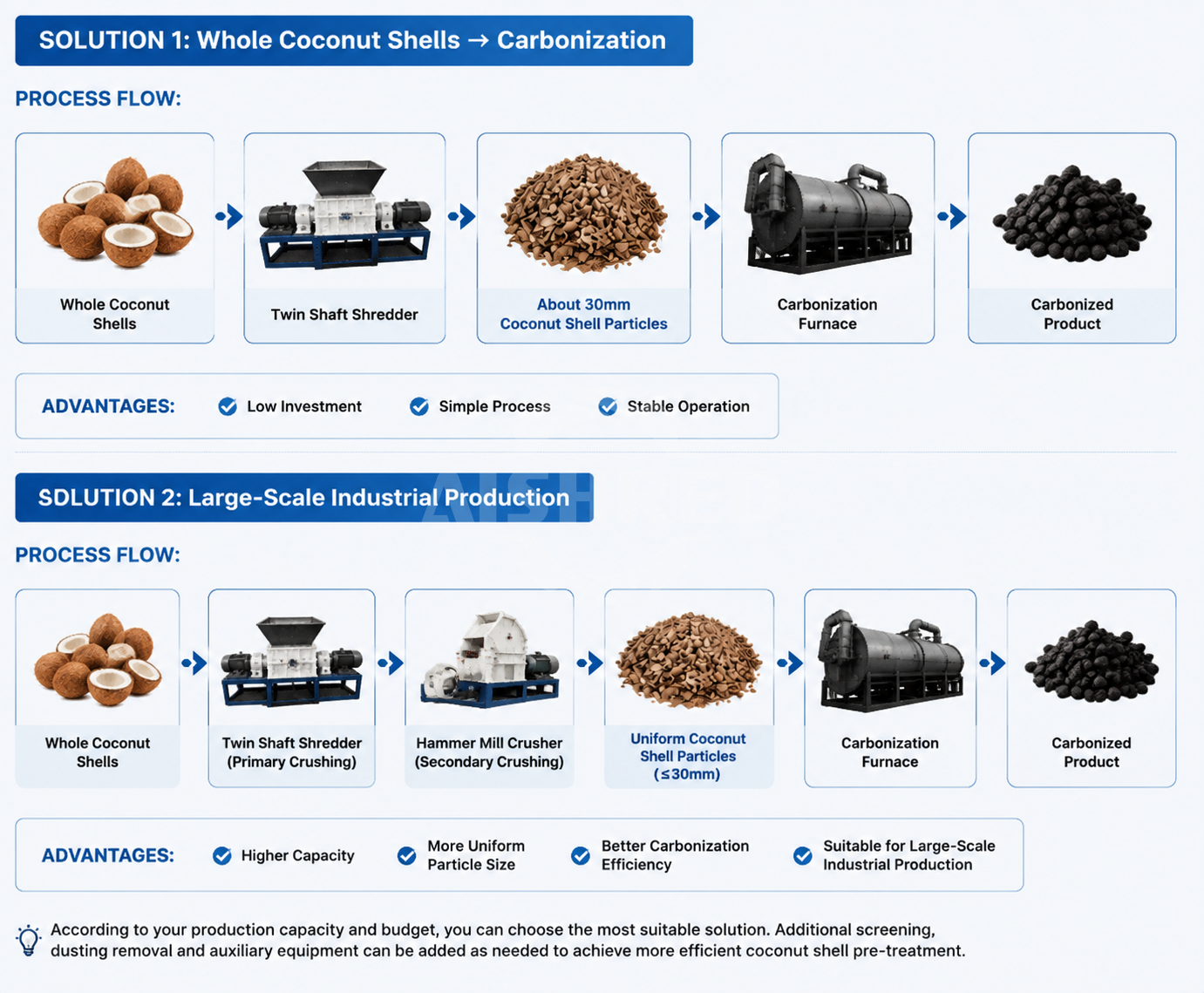
Choosing the right coconut shell crusher depends on:
- Raw material size;
- Required capacity;
- Final particle size;
- Carbonization process requirements;
- Investment budget.
GEP ECOTECH provides customized coconut shell preprocessing solutions, including twin shaft shredders, hammer mill crushers, and complete crushing systems, helping customers improve coconut shell utilization efficiency and optimize carbonization production.