The selection divergence in wood pallet shredding is usually concentrated between two types of equipment: the double-shaft shredder and the drum chipper. Both can play a role in wood pallet shredding and volume reduction, but their working principles and output forms are different, and the applicable scenarios are therefore also different.
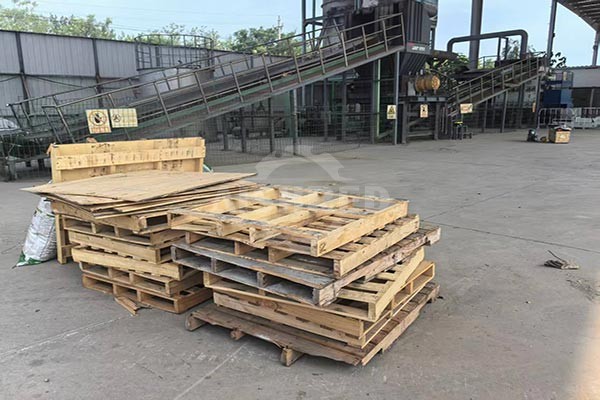
Actual Differences Between the Two Types of Equipment When Processing Wood Pallets
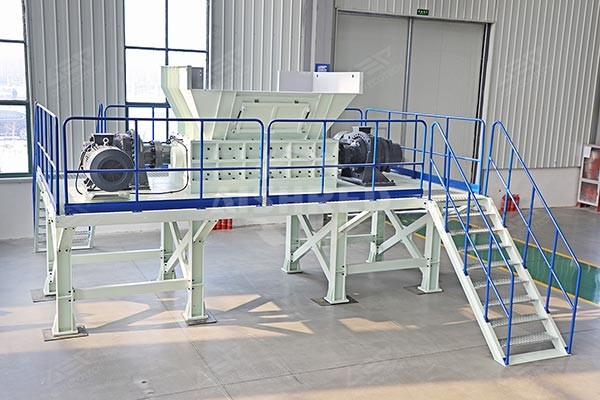
The double-shaft shredder applies shearing and tearing action to materials through two counter-rotating low-speed shafts. The rotational speed is usually on the order of tens of revolutions per minute, and shredding is completed by relying on torque rather than speed. This principle determines several of its characteristics: it has good tolerance to nails and screws embedded in pallets; the output is coarse-shredded, irregular wood blocks, with sizes generally between tens of millimeters and over one hundred millimeters; dust and noise are relatively low during operation. Its core value lies in volume reduction and coarse shredding, processing whole pallets into a form convenient for conveying, magnetic separation, or further processing.
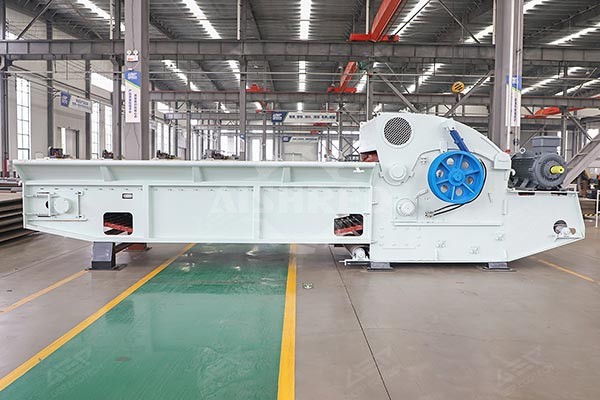
The drum chipper takes another path: the rotor drives hammers or knives to rotate at high speed, shredding materials by impact and striking, and controls output particle size through a screen. Its output is finer and more uniform, and it is suitable for scenarios with clear requirements for final material size, such as biomass fuel, mulch, or animal bedding. But this advantage has preconditions: high-speed rotating parts are more sensitive to metal impurities. If nails and metal connectors are not removed in advance, they will accelerate the wear of hammers or knives, and even cause unplanned downtime.
GEP ECOTECH: Customizing Processing Solutions According to Customers' Actual Conditions
When customers consult about wood pallet shredding equipment, GEP ECOTECH's engineering team will confirm the best solution configuration for customers through the following points:
Pallet composition and impurity content
According to different situations of whether the pallet is pure wood or has a large number of nails, screws, and metal corner protectors, and whether plastic, cardboard, or other non-wood attachments are mixed in, GEP ECOTECH will provide different solution choices. The double-shaft shredder has good adaptability to nail-containing pallets, but if metal parts are large in size or dense in number, manual sorting or magnetic separation links still need to be set before feeding, and the equipment's tolerance cannot be equated with "no need for pre-treatment." If metal impurities in the customer's processed materials are highly uncertain, the double-shaft shredder as first-stage coarse shredding is a more reliable choice.
Target output size and final use
This is the key to determining whether second-stage shredding is needed. If the customer's goal is outward transport after volume reduction, feeding into a boiler for direct combustion, or use as coarse biomass fuel, the output of one coarse shredding by the double-shaft shredder is usually already sufficient. If the final material needs to enter pelletizing, briquetting, or links with requirements for particle size uniformity, then fine shredding equipment needs to be connected after the double-shaft shredder to further control the output to a smaller range.
Site conditions and installation forms
A stationary production line is suitable for scenarios with concentrated pallet sources and continuous operation needs, and is convenient for integrating conveying, magnetic separation, screening, and dust removal into a complete process. If processing points are scattered, or mobile operation is needed among multiple storage sites, GEP ECOTECH can provide mobile equipment to meet the owner's needs for different operation scenarios.
GEP ECOTECH's equipment combinations and project experience in the field of wood pallet processing can provide specific configuration references for the above judgments. If you currently have a wood pallet project under evaluation, provide material photos, impurity content, target output, and approximate capacity, and you are welcome to contact us to discuss the optimal disposal solution together.